 An official U.S. government website


Media Release
- By Stephen Staudigl
- December 06, 2018
NCPC Comments on Draft Small Cell Infrastructure Guidelines
Washington, DC –The National Capital Planning Commission (NCPC) provided additional comments at its Thursday, December 6 meeting on the small cell guidelines proposed by the District Department of Transportation (DDOT), including a map intended to guide the location of small cell infrastructure in the city’s federal core. Commissioners recognized the growing demand for wireless technology, but know that the deployment of small cell infrastructure, a new lower-powered antenna technology, will impact the views, aesthetics, and access along streets and public spaces.
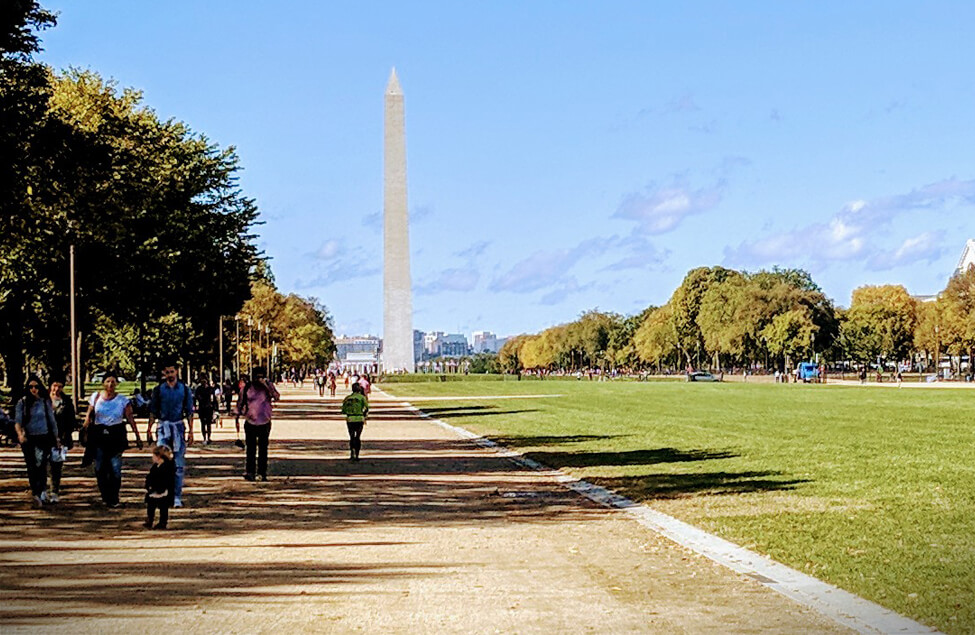
The District Department of Transportation, the lead agency and liaison with the cellular providers who want to install small cell infrastructure, is developing guidelines—with input from NCPC and other agencies—for the placement of small cell infrastructure within the city, which will include stand-alone poles and equipment as well as installations on existing poles. NCPC focused its review of DDOT’s proposed guidelines on potential impact in the city’s federal core in and around the National Mall. In its previous review, the Commission directed NCPC staff to prepare a map of proposed locations for small cell infrastructure in this area. The Commission accepted this map and requested that DDOT include it in their final guidelines.
The National Park Service is working separately with providers to permit small cell technology at the National Mall, other parks, and certain streets under their jurisdiction. NCPC requested that no small cell infrastructure be permitted along Constitution and Independence Avenues until a more comprehensive evaluation of coverage needs and facilities placement can be developed jointly with the National Park Service and other landholders, including the Smithsonian Institution; and directed NCPC staff to work with these and other landholders over the next six months. While noting that DDOT is responsible for reviewing and approving permit applications for small cell facilities within District of Columbia rights-of-way, NCPC requested two guideline revisions that would require NCPC review. First, if a carrier sought an exception from the guidelines within the streets identified on the Federal Interest Area Map or adjacent to any federal property, and two, if a proposal sought to move or alter temporary or permanent security elements along or adjacent to federal property.
The Commission noted its support for DDOT’s potential development of a new, high-quality standalone pole design over the next six months. During this time, small cell infrastructure could only be permitted on existing light poles. Commissioners said that development of a high-quality pole design would be beneficial not only to Washington, but to other cities evaluating the addition of this infrastructure.
NCPC then approved the final master plan for consolidation of the U.S. Food and Drug Administration Headquarters at the Federal Research Center White Oak campus in Silver Spring, Maryland, with one exception. NCPC deferred action on one of three proposed parking garages due to its potential negative impacts on traffic and the environment. Several major development projects and transportation improvements in the surrounding area are anticipated, so the Commission requested that additional transportation studies be conducted to more accurately assess parking needs when the proposed parking garage is slated for construction in 15 years. The Food and Drug Administration currently occupies 130 acres on the 662-acre campus.
The master plan submitted by the General Services Administration will guide future growth, including the addition of approximately 7,018 employees (increasing the total to approximately 18,000 from the current 10,987), expansion to 9.2 million gross square feet of space for offices, labs, and special uses (from the current 4.8 million), and the addition of 4,798 parking spaces (an increase from the existing 6,817 spaces to 11,615 total).
The Commission commended the General Services Administration for taking into consideration previous NCPC comments to improve the preferred design alternative which maintains the campus’s architectural character and urban design framework, minimizes adverse effects to its historic setting, and reduces environmental impacts. This alternative includes four new office buildings: a 16-story tower, a 14-story tower, and two mid-rise buildings. It also includes a dining pavilion, conference center, visitor and transit center, communications center, fitness center, distribution center, truck screening facility, and the parking garages.
At the request of NCPC staff, the Commission adopted the Comprehensive Plan for the National Capital’s Parks & Open Space Element. The Comprehensive Plan’s Federal Elements are the primary guidance that the agency uses to review federal development projects. The Parks & Open Space Element establishes policies to protect and enhance the region’s federal parks and open spaces.
The element was last updated in 2004. Its policies will remain in effect for 60 days after the publication of a Federal Register notice announcing the Commission’s adoption. At that time the updated element’s policies will be effective and used by staff to evaluate future projects.
Before adjourning the Commission approved revised preliminary site and building plans submitted by the National Park Service (NPS) for the rehabilitation of Franklin Park, located downtown at the intersection of 14th and K Streets, NW. NPS, along with the District of Columbia and the DowntownDC Business Improvement District, wants to renovate the park to create a more user friendly urban space with amenities including a central plaza with an improved fountain and new benches, café (with restrooms) and pedestrian plaza, and a children’s garden. Plans also call for use of the east and west lawns for events, removal of 46 diseased trees, and the addition of 80 new trees. The park was established in 1867 and last renovated in 1936.
NCPC approved the plans, noting that it is important that the new design respect the park’s historic character while providing an urban park setting and amenities that will benefit local citizens and workers. Commissioners noted their support for the new children’s garden concept and the café and plaza design. NPS provided nine different concepts for a renovated/reimagined central foundation, ranging from restoring the existing fountain to replacing it with a water scrim and jet water feature. The Commission was not in favor of restoring the existing fountain as is, or totally removing it. They found that the options that incorporated elements of the existing fountain would best meet historic preservation, programming, and design needs, and expressed interest in a fountain design that allowed for year-round programming flexibility.
The Executive Director approved five items, under authority delegated by the Commission.
1. Preliminary and final building plans for modifications to One Freedom Plaza, 1301 Pennsylvania Avenue, NW. (P7298)
2. Preliminary and final building plans for a lightning protection system at the Kennedy Center Expansion, 2700 F Street, NW. (7523)
3. Preliminary site and building plans for Parcel I at The Yards, 145 N Street, SE. (8031)
4. Preliminary and final site development plans for the NoMa Business Improvement District Chicken and Egg temporary art installation, New York Avenue and N Street, NE. (7990)
5. Approval of a report to the Zoning Commission of the District of Columbia regarding a Map Amendment at Square 72 - BSREP II Dupont Circle, LLC, 1143 New Hampshire Avenue, NW. (ZC 18-08)

