 An official U.S. government website


- By Justine Brandes *
- July 26, 2024
A New Future for Commemoration? Insights from the Beyond Granite Key Findings Report
At the end of May, the Beyond Granite partners—the Trust for the National Mall, NCPC, and National Park Service—released the Key Findings report from the Beyond Granite: Pulling Together pilot exhibition. Dr. Elizabeth Morton, author of the assessment report, asserts that significant public demand exists for such exhibitions on the National Mall, including a strong desire to explore contemporary themes in a commemorative context. I found it especially remarkable that Morton noted a rare 90% participation rate in the visitor evaluation survey which she felt expressed the public’s strong interest.
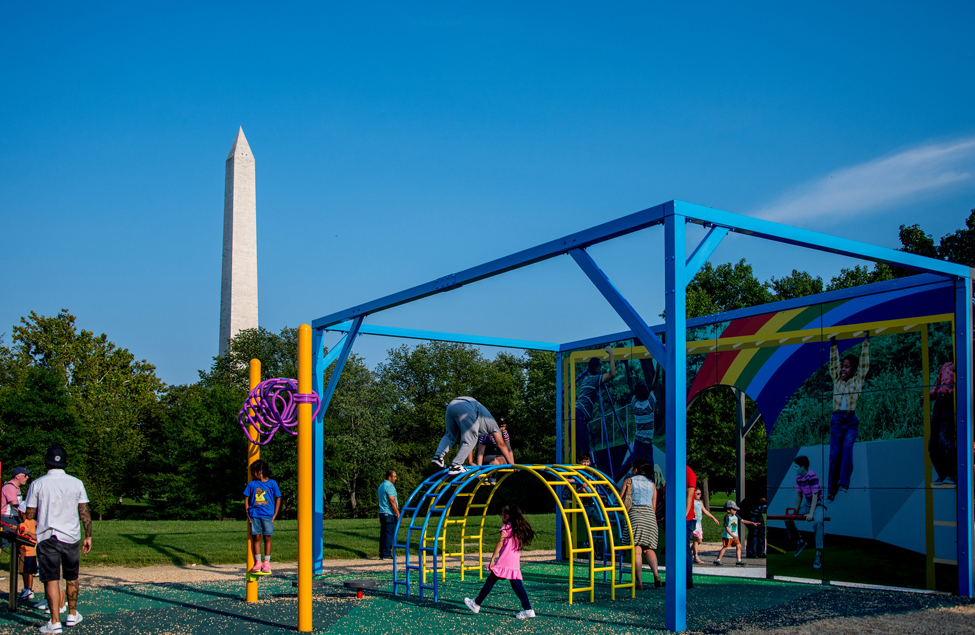
Based on responses in the Key Findings Report, one of the standout artworks from the Beyond Granite pilot exhibition was artist Derrick Adams' America's Playground: DC. This site-specific installation sparked civic conversations about the role of play and community-building in commemoration design, while also addressing complex themes such as racial segregation in the United States. Survey results from the Key Findings report conveyed that Adams' work not only resonated with visitors but also challenged traditional notions of what constitutes a commemorative monument on the National Mall.
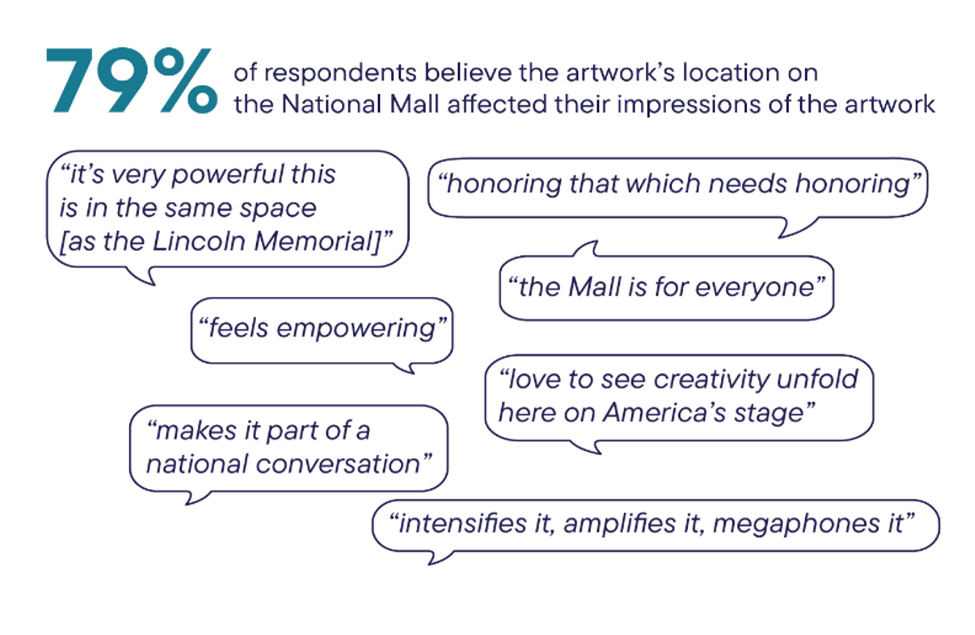
The National Mall Location intensifies, amplifies, and megaphones the significance of an art piece.As NCPC reflects on the feedback of the Key Findings report, staff planners are continually reminded of the impact of urban planning decisions in shaping the National Mall's future. Balancing the preservation of iconic commemorative works with the juxtaposition of new voices and design perspectives requires careful deliberation by planners. The National Mall is more than a physical space to place museums and monuments; it requires creating meaningful, inclusive, and intentionally designed places that resonate with all who visit our Nation’s Capital. The Key Findings report revealed that visitors felt this sentiment, with 79% of respondents expressing the opinion that the National Mall locations directly informed their impressions of the overall exhibit.
-Response in Key Findings Report
Growing up in DC, the grand monuments that line the streets and Mall alike created a sense of profound importance and subscribed a unique identity to this city for me. Yet, generationally, there are times that grand gestures to a troubled past feel overbearing and claustrophobic. As an intern at NCPC, I understand the weight of commemoration on not only the design of space, but the tone that commemorative works can create that ripple across communities. How do we ensure that commemorative works are inclusive, reflecting the diverse voices and experiences that shape our nation’s history? How can we honor the past while acknowledging its complexities and ensuring relevance for future generations? In times of uncertainty, the National Mall is a gathering place that roots present challenges in historical context through the power of the visitor’s engagement in commemoration. Not one memorial stands alone, nor is it isolated from the public’s attention.
Americas Playground: DC is an installation that highlights this very point. What strikes me the most about Adams’ artwork is that he created a place on the National Mall that children felt was theirs, a place to be joyful, while also facilitating a perhaps unspoken conversation between generations and ways of interpreting the significance of the American experience. I find this to be unbelievably powerful, and it turns out that I am not the only one who let the conversational nature of the Beyond Granite pilot exhibition trigger such an emotional reaction.
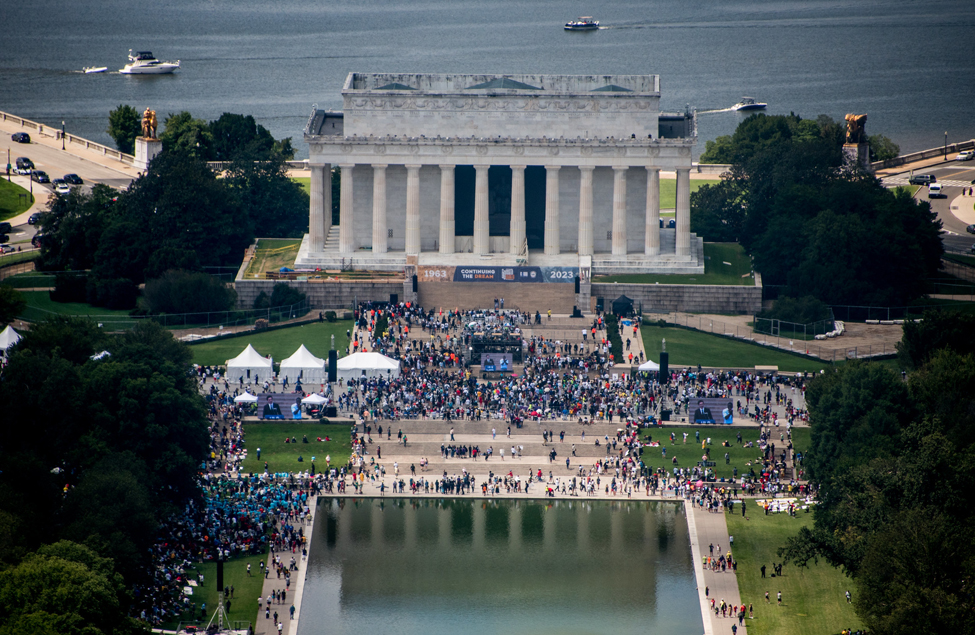
While the exhibition has now been dismantled, there is something to be said for the ephemeral approach taken by the Beyond Granite initiative. Just because an installation is temporary does not mean it is any less significant than a commemorative work carved from white marble or granite, like the Lincoln Memorial. What makes Beyond Granite so special is this exact counter-point to the curated permanence devoted to the Nation’s founding fathers. The temporary works can still live on in the memory of the visitors who embraced the Beyond Granite: Pulling Together exhibition, making room for even more voices on this iconic landscape dedicated to remembering the past.
* Justine is a summer intern for NCPC. She is an undergraduate student at Georgetown University majoring in Interdisciplinary Studies with a focus on Urban Sustainability. Justine’s thesis is about placemaking, urban culture, and human-environmental connections. Born and raised in DC, Justine brings a localized perspective to her work here at NCPC.
Beyond Granite

