 An official U.S. government website



- By Brittney Drakeford and Johanna McCrehan
- October 10, 2023
Expanding America’s Stories on the National Mall
On September 18, Beyond Granite: Pulling Together closed after a whirlwind month of exploration and enjoyment of the first ever curated art exhibition on the National Mall. The exhibition featured work by six contemporary artists that all responded to the question, “What stories remain untold on the National Mall?”
The initiative was led by the Trust for the National Mall in partnership with the National Capital Planning Commission and the National Park Service, with support from the Mellon Foundation. For NCPC, it was an opportunity to see in real time the fruition of a multi-decade-long idea in the making: how temporary exhibits can diversify the commemorative landscape and expand the ways we tell stories on the National Mall.
Pilot Program
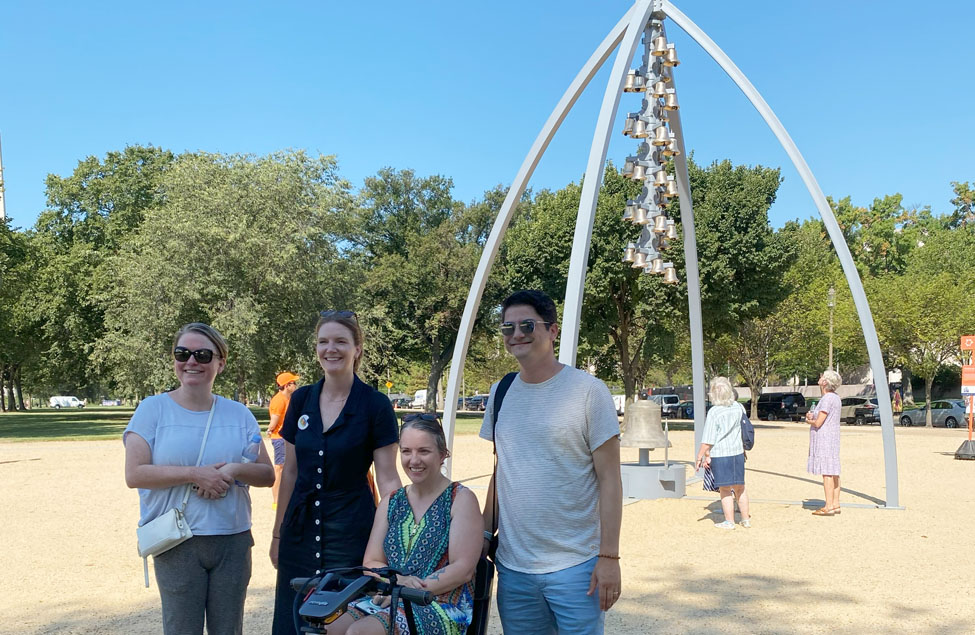
The partners worked with co-curators Paul Farber and Salamishah Tillet for Monument Lab and six artists from across the country who designed art installations for the exhibition, including: Derrick Adams, Tiffany Chung, Ashon T. Crawley, vanessa german Paul Ramírez Jonas, and Wendy Red Star. Each artist created a work that reflected stories of national significance, and personally resonated with them, yet were missing from the National Mall.
The artists also developed interactive community programs and events that created spaces for contemplation, joy, and empathy. vanessa german’s “Blue Walk” ritual of redemption and grace in movement and song circled the Lincoln Memorial Reflecting Pool, bringing people and attention to this prominent space, and her artwork entitled Of Thee We Sing, on the exhibition’s opening weekend. german’s performance provided a new moment in alignment with Marian Anderson’s historic 1939 performance that her piece honored.
Derrick Adams held a “Play Day” at America’s Playground: DC, activating the immediately well-loved and well-used jungle-gym with music, bubbles, hula-hoops, double-dutch jump roping, and ice cream – all important elements for a fun day on the Mall. This joyful engagement provided a juxtaposition to the artwork’s focus on desegregated public spaces in our nation’s capital.
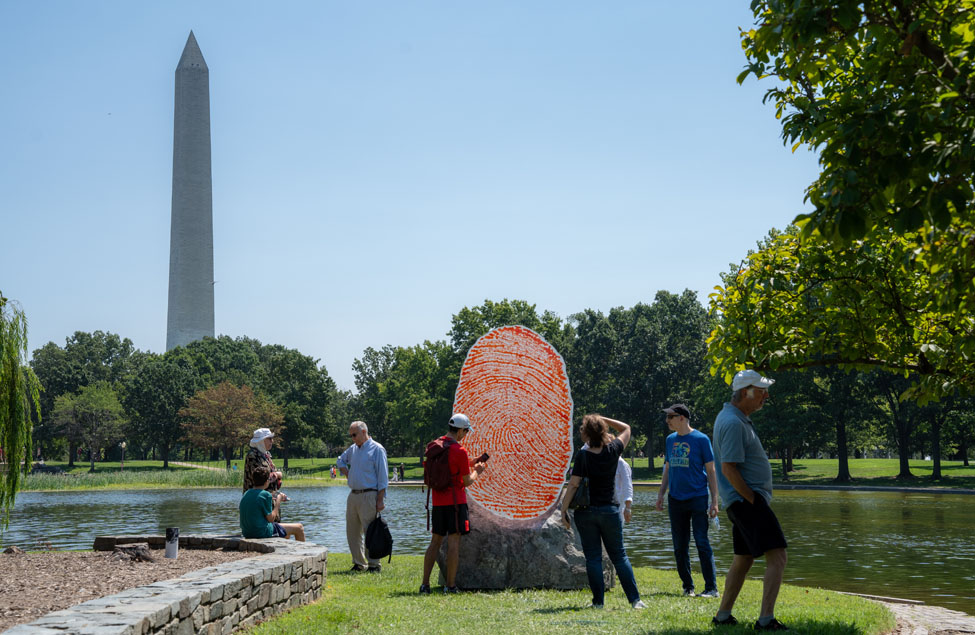
Later in the month, Wendy Red Star held a conversation on indigenous legacies and how those histories are preserved and shared that gave more resonance to her piece, The Soil You See…. This monumental thumbprint with the names of Crow chiefs who signed treaties with the U.S. Government was located next to the 56 Signers of the Declaration of Independence memorial in Constitution Gardens.
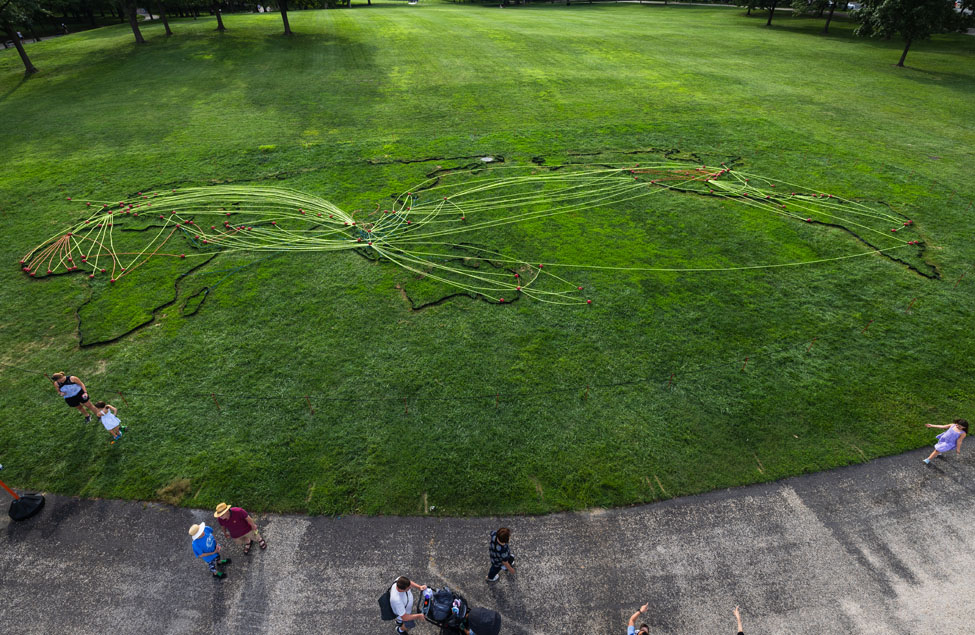
Tiffany Chung held a mapping workshop at the site of her earthen world map For the Living to discuss immigration routes, centering refugee narratives beyond her personal story of the Southeast Asian diaspora after the Vietnam War. And after a rainy Saturday, an engaged crowd came together at the Church of the Epiphany for a live concert of Ashon T. Crawley’s composition, HOMEGOING, in a moving performance that gave life and voice to those black musicians and church leaders lost to the AIDS epidemic.
These events underscored how important programming and activation are to create new experiences, build empathy, and bring vibrancy to spaces and stories.
Visitor Experience
The public reaction and response to the Beyond Granite: Pulling Together exhibition was overwhelmingly positive. An estimated two million people visited the exhibition, the Let Freedom Ring bell was rung around 20,000 times, and countless kids young and old played on the playground. The exhibition audience extended beyond the capital region, with more than 400 print and broadcast stories covering the program.
NCPC’s Executive Director Marcel Acosta conducted several interviews and podcasts about the agency’s work and involvement with Beyond Granite. He was featured in discussions with NBC News, City Cast DC, and in the American Planning Association blog. Other Beyond Granite news coverage can be found online.
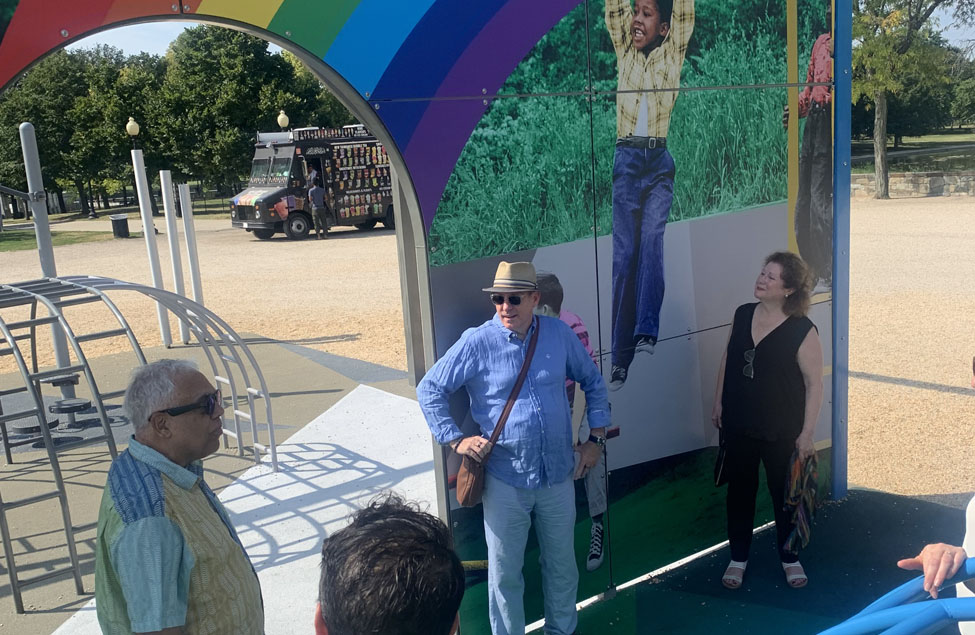
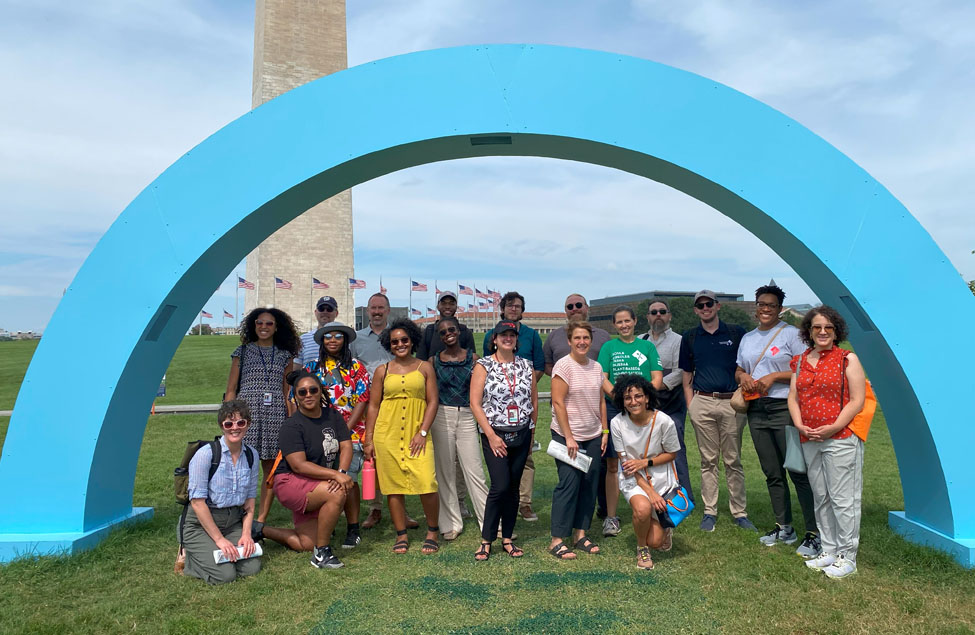
Tours were a new and engaging way for NCPC staff to collaborate and discuss how the National Mall is used for commemorative activities, as well as hear how artworks at a more human scale than traditional memorials can change the way people engage with and experience the Mall. We were also able to hear from young audiences what it meant to see these new stories, including their opinions of being in this symbolic public space, often for the first time
Visitors appreciated the new perspectives and noted how our history could be presented in new ways, and in spaces that bring different relevancy to the existing monuments. Visiting groups also enjoyed the element of surprise to see artworks that brought color, interactivity, and play to the Mall.
Evaluation and Next Steps
“Over the past month, Beyond Granite: Pulling Together accomplished what we hoped it would do. It created new opportunities for more of America’s stories to be told in our nation’s capital in a way that protected the National Mall’s open spaces.” said Executive Director Acosta.
We will also continue to engage in thoughtful conversations with project stakeholders, including artists, curators, the curatorial and community advisory groups to develop solutions for preserving the historic character of the National Mall, while ensuring that it remains an open canvas for American generations now, and beyond.
And, according to Executive Director Acosta, “With the lessons learned from this successful pilot, the partners will work together to make Beyond Granite a permanent program for temporary artworks .”
NCPC Commemoration Resources
For more information on the history and planning work that led to the development of the Beyond Granite pilot program, see:
- Memorials and Museums Master Plan, which responded to the ongoing need of future generations to locate memorials in Washington, DC, and its environs. An update of this is underway and will include the findings from this pilot exhibition.
- Memorial Trends and Practice report, which recommended temporary art works as a way to explore diversifying the commemorative landscape.
- Memorials for the Future design competition, which pushed boundaries on what memorials could look like, including different dimensions of colors, materiality, shapes, senses, time, and subjects.
- View the September 2023 Information Presentation to the National Capital Planning Commission.
Beyond Granite Commemoration

