 An official U.S. government website


- By Bsrat Mezghebe
- February 16, 2023
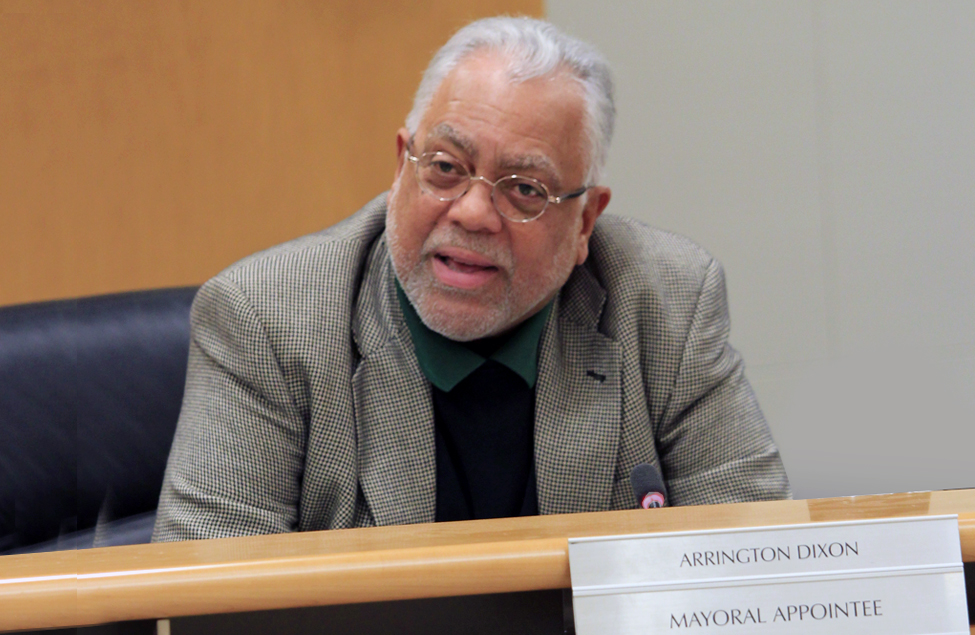
Five Questions for NCPC Vice-Chair Col. Arrington Dixon
Time flies when you’re having fun! To celebrate Black History Month, we posed some questions for NCPC Vice-Chair Colonel Arrington Liggins Dixon, who has served on the Commission as a Mayoral appointee since 1995 and is its longest current serving member. Vice-Chair Dixon boasts an illustrious career in public service and the private sector. He was the second DC Council Chair, former Chair of the Metropolitan Washington Council of Governments, and former Chair of the Anacostia Coordinating Council.
1. How does your background as a native Washingtonian inform your work as a NCPC Commissioner?
To start, I have experiences and deep attachments with so many different parts of the city. I grew up in Anacostia, went to public schools, attended Howard University and the George Washington University Law School, and lived and worked across the city. I remember what it was like to first be exposed to areas and communities different from my own. And throughout my career, I have had years of experience in local politics, community organizations, and the military and private sectors. When I review projects as an NCPC Commissioner, I bring my background as someone who hopes that all residents, workers, and visitors can take part in all that Washington has to offer.
2. Encouraging public engagement has always been important to you. What do you see as the opportunities—and the challenges—for involving the public in NCPC's work?
While online engagement has made it more convenient for many members of the public to stay up-to-date with NCPC’s work, we should also be mindful of how it excludes those without internet access. NCPC should continue to promote inclusive public engagement that meets the public where they are. Partnering with existing community-based organizations can help us do this. Another challenge is to engage with communities that don’t feel fully vested for various reasons. For example, 70% of residents in Anacostia are renters, which impacts their perceived stakes in planning and community development. Washington also has a considerable transient population, and due to rising housing costs, the renter population might increase.
3. NCPC reviews many federal projects in the District. Are there any upcoming or recent projects that you think will have a big impact? .
As it continues to develop, the St. Elizabeths West Campus can be a catalyst for positive change in Anacostia. To have this impact, it’s important for there to be business and employment opportunities that allow residents to work and thrive in their community. During my childhood, St. Elizabeths was the site of a hospital that employed a substantial number of people who lived in Anacostia. It would be great if the contractors of this proposed development put forth purposeful effort to engage with members of the community and both local for-profit and non-profit entities.
4. Along with other federal and regional agencies, NCPC is working to better advance equity in its policies and programs. What role do you think NCPC can play in better serving marginalized communities?
This is certainly important work, and I’ve touched on what NCPC can do in my previous responses. Effective outreach and inclusive engagement to understand the needs of underserved communities and meet them are essential. Also essential is the vital commitment of the talented NCPC staff to sustain the time, energy, and creativity that this work requires.
5. When people visit Washington, DC today, what experiences would you like them to have?
We know that people come to Washington from all over the country and the world to experience the spectacular institutions and landmarks of our national history. I would love for visitors to also seek out our rich local history, such as Frederick Douglass’s historic home and the Anacostia Community Museum. Washington is not only the nation’s capital but is also the home of vibrant and proud local communities.

