 An official U.S. government website


- By Bsrat Mezghebe
- May 23, 2022
Preserving Asian American and Pacific Islander Heritage in the National Capital Region
May is Asian American and Pacific Islander (AAPI) Heritage Month and Preservation Month. In celebration, we’re highlighting groundbreaking efforts to identify AAPI historical and cultural resources in Maryland and Washington, DC.
Less than 8% of the sites included in the National Register of Historic Places, the nation’s official list of historic places deemed worthy of preservation, are associated with African American, American Latino, Asian American, American Indian, and other minority communities. As part of the Montgomery County Planning Department’s Equity Agenda for Planning, the Historic Preservation Office launched the AAPI Heritage Project in February 2022. This project aims to mitigate past inequities in historical preservation through the study of AAPI historical and cultural resources, collection of oral histories, and identification of relevant themes to be used for future historic property designations. The project also features an interactive feedback map for members of the public to identify places of personal and community importance such as homes, restaurants, and places of worship.
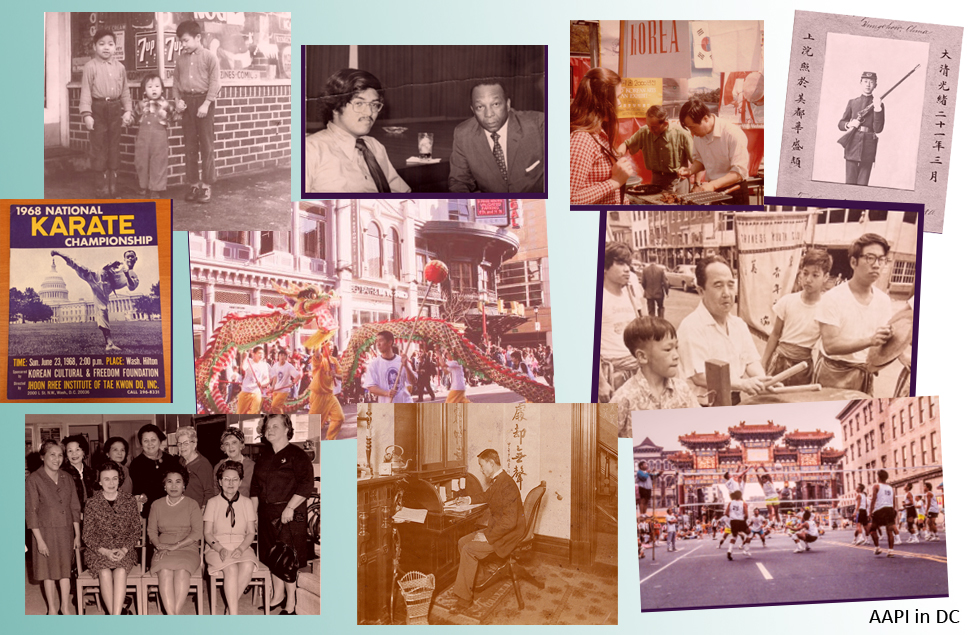
Similar efforts are underway in Washington, DC. With funding from the National Park Service, the 1882 Foundation, DC Historic Preservation Office, and DC Preservation League have partnered to conduct research and prepare a report that will build a framework for identifying and evaluating AAPI historic resources in the nation’s capital, as well as support the nomination of sites to the National Register of Historic Places. The project’s initial efforts are focused on Chinese American and Korean American history between the late 1800s through 1990. Community engagement is a key source of stories, images, and artifacts that will inform the report and resource survey on Asian American historical experiences in Washington, DC.
NCPC looks forward to the ongoing work of these initiatives, and to a better understanding of how the federal government’s presence and continuing development in the capital city affected AAPI communities. For example, while many may be familiar with the various redevelopment efforts shaping today’s Chinatown area located along H Street, it is less well known that the federal government displaced the merchants and residents from the original Chinatown, located on Pennsylvania Avenue between 4 ½ Street and 7th Street, NW, in the 1930s to develop a municipal center on the 300 block of Pennsylvania Avenue as part of the Federal Triangle development.
Montgomery County AAPI Heritage AAPI in DC Historic Preservation Element

