 An official U.S. government website


- By Melissa Lindsjo
- May 25, 2022
Working with Arlington County to Protect National Mall Views
The form and character of Washington’s monumental core are an important part of how the public experiences our nation’s most beloved memorials, open spaces, and public buildings. NCPC and Arlington County have a shared responsibility for stewardship of the urban design framework of the National Capital Region, including views to and from the monumental core. Over the past year, NCPC reviewed multiple projects in Arlington County to assess the impacts of proposed building heights on views from the National Mall.
Primary Vistas in the Nation’s Capital
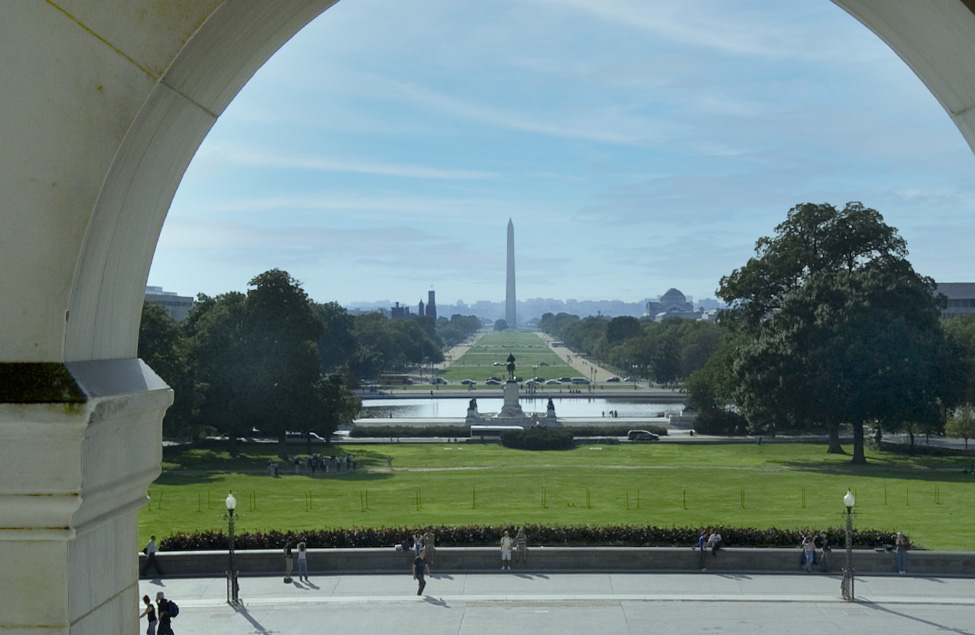
One of the most important contributors to the capital city’s image is its unmistakable and symbolic skyline and sweeping vistas in the monumental core. 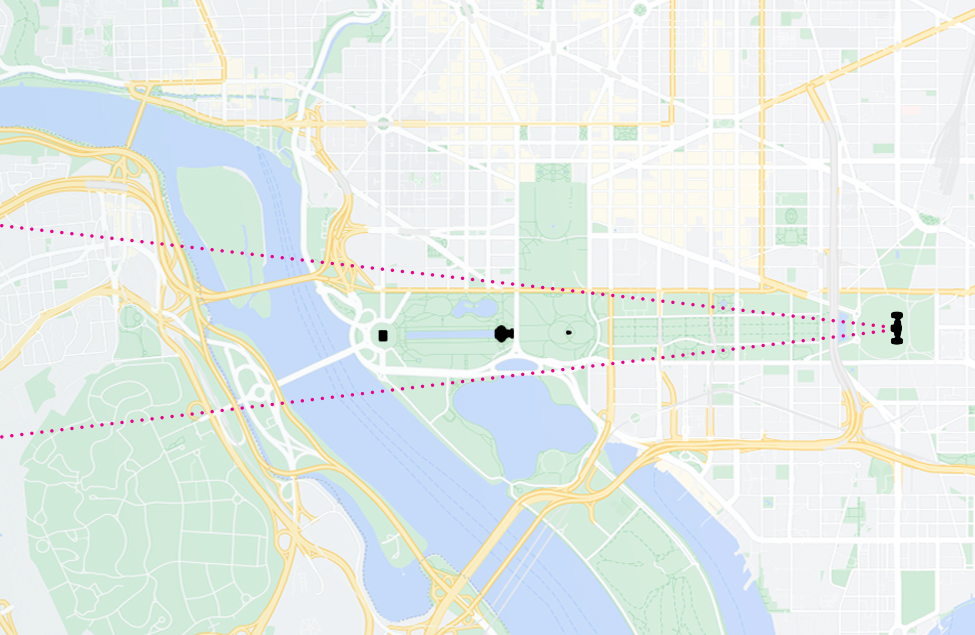
There are two primary vistas in the nation’s capital: the East-West vista and the North-South vista. These vistas are defined in the Federal Urban Design Element Technical Addendum of the Comprehensive Plan. The East-West vista provides a strong visual connection from the U.S. Capitol along the National Mall to the Lincoln Memorial and westward to the horizon. This axis is an essential orientation point that establishes the spatial order of the city and contributes to the visual quality within the monumental core (see Figure 1).
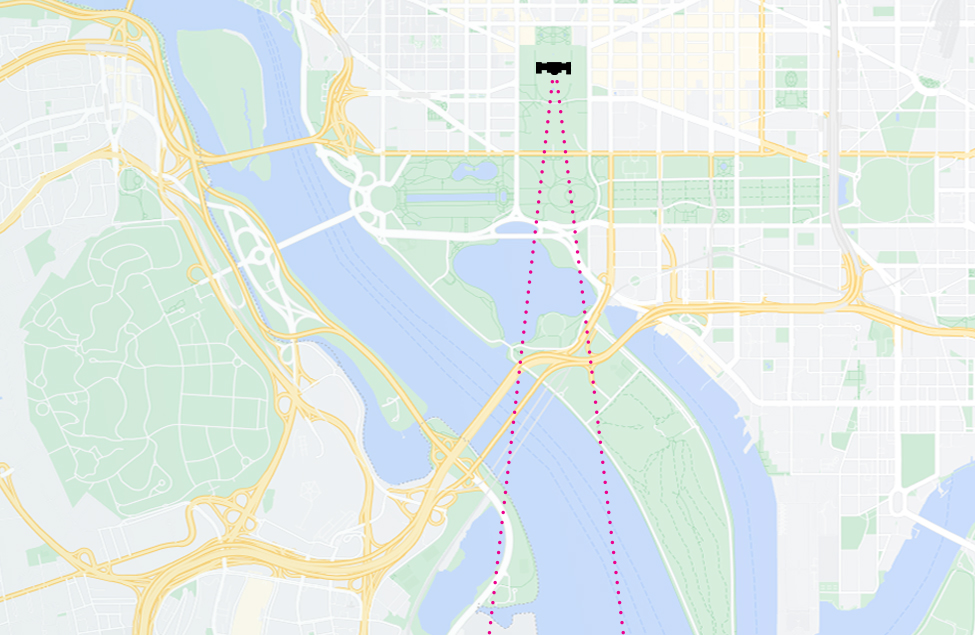
The North-South vista is from the White House to the southern horizon, including the Washington Monument, the Jefferson Memorial, the Tidal Basin, Potomac River, and the Wilson Bridge (see Figure 2). The Crystal City neighborhood in Arlington County serves as part of the visual backdrop of this vista, as well as the George Washington Memorial Parkway, Ronald Reagan Washington National Airport, Pentagon, and Air Force Memorial.
The federal 1910 Height of Buildings Act (Height Act), which regulates building height in the District of Columbia, has played a central role in shaping the form of the skyline, particularly within the boundaries of the L’Enfant Plan area and topographic bowl, a series of low hills which includes the Anacostia Hills, Arlington Ridge, and the Florida Avenue Escarpment. However, outside of the District, different approaches have been used to protect these critical capital vistas.
NCPC Review of Arlington Building Heights
The Arlington County Board recognized the importance of the relationship between the County and the National Mall in the Resolution of Concern Regarding Building Heights Related to the National Capital Mall Axis, which it adopted in 1982. The resolution addresses NCPC concerns over the height of structures in the area defined as the National Capital Mall Axis, including portions of the Rosslyn, Courthouse, Clarendon, and Virginia Square Metro Station Areas. NCPC has coordinated with Arlington County on multiple redevelopment projects in Arlington, VA subject to this resolution. Generally, the intent is to provide a low, consistent building line near the axis, so as not to compete visually with views down the Mall. In 2014, NCPC reviewed the visual impact of the proposed Courthouse Square Plan building heights on the National Mall viewshed. It was determined that a “cone sightline” from the National Mall viewshed may be appropriate to shape future development, as shown in Figure 3. This guides building height to be lower on the axis while building heights on the edges and outside the cone can be higher. Building heights defining Arlington’s Courthouse skyline are generally in the range from 180 to 210 feet. For reference, the Washington Monument's height is 555 feet. NCPC has also worked with Arlington County to ensure that building lighting and signage is directed away from this sightline.
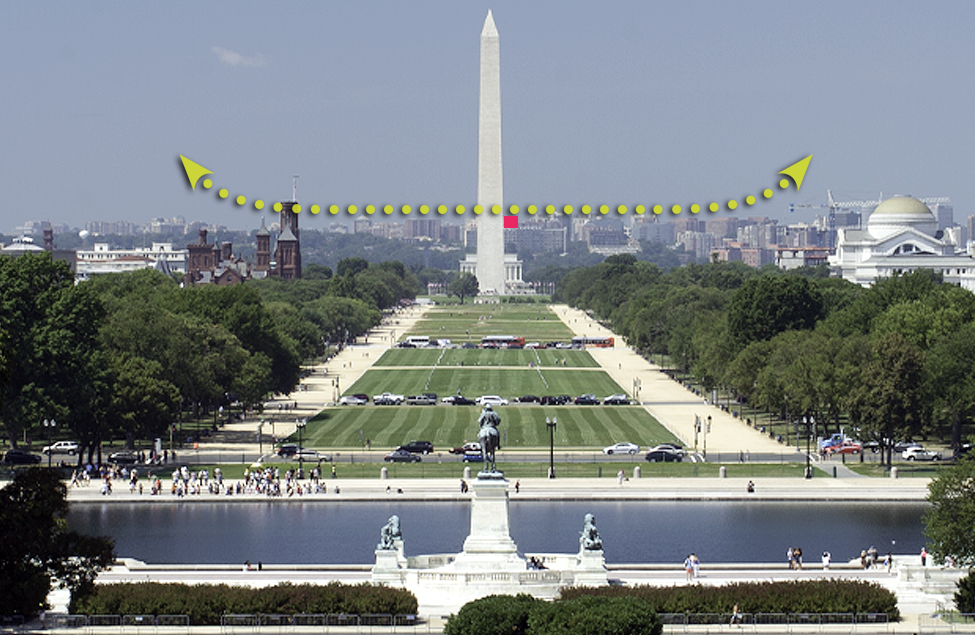
One of the projects is the proposed Marbella Apartments Redevelopment, which would construct two new 12-story multifamily residential towers with a senior housing component and 100% of the units committed as Affordable Dwelling Units at 1251 N. Pierce Street and 1300 N. Pierce Street. As seen in Figure 3, due to the height of the existing Prospect House building (shown in pink), the proposed Marbella Apartments Redevelopment would not be visible from the U.S. Capitol, Washington Monument, Lincoln Memorial, and Iwo Jima Memorial. NCPC’s visual analysis, which is included in the comment letter linked below, concluded that the proposed building height of the redevelopment would have no significant impact on the viewshed. More information on the other reviewed projects, including the Crystal City Building Heights Study, 1616 Fort Myer Drive, and 2025 Clarendon Boulevard Redevelopment, can also be found at the links below.
Continuing coordination between NCPC and Arlington County is critical to ensuring the preservation of these historic viewsheds. NCPC appreciates the consideration extended by Arlington County to the form, order, and character of the monumental core skyline. Arlington County Planning Director Anthony Fusarelli, Jr., AICP said, “We truly appreciate the collaboration we’ve established and maintained between our teams in the review of several recent County planning efforts and development projects in Arlington, and undoubtedly more to come ahead. The clarity and completeness of the NCPC technical analyses are valuable inputs into our Arlington staff review of these proposals and help inform our recommendations to the Planning Commission and County Board prior to consideration and action.”
NCPC looks forward to continuing to work with all regional jurisdictions to protect and enhance the National Capital Region’s unique historical, cultural, and natural resources.
Federal Urban Design Element Federal Urban Design Element Addendum Arlington County Resolution NCPC Comment Letter Marbella Apartments Crystal City Building Heights Study 1616 Fort Myer Drive 2025 Clarendon Boulevard

