 An official U.S. government website


- By Bsrat Mezghebe
- December 20, 2021
Pop Quiz: Do You Know What a Legation Is?
During NCPC’s December 2021 meeting, Commissioners provided comments on a site selection study submitted by the National Park Service, in collaboration with the Daughters of the Republic of Texas, for the establishment of the Texas Legation Memorial in Washington, DC. For many, this prompted the question: “What is a legation?” Here are some fun facts about this relic of diplomatic history.
Legations used to be more common than embassies
A legation is a diplomatic mission in a foreign country that ranks below an embassy. Ambassadors, who head embassies, outrank ministers, who head legations, and take precedence at official events. Throughout the 19th century and early part of the 20th century, legations were the most common form of diplomatic missions. Embassies were largely only established by major power monarchies in other monarchies of similar status. Legations gradually became less popular after World War II, and embassies became the standard form of diplomatic mission. The last legation in the world was the Swedish legation to South Africa, which was upgraded to an embassy in 1994 after the release of Nelson Mandela from prison and the abolishment of apartheid. The Republic of Texas was recognized by seven countries
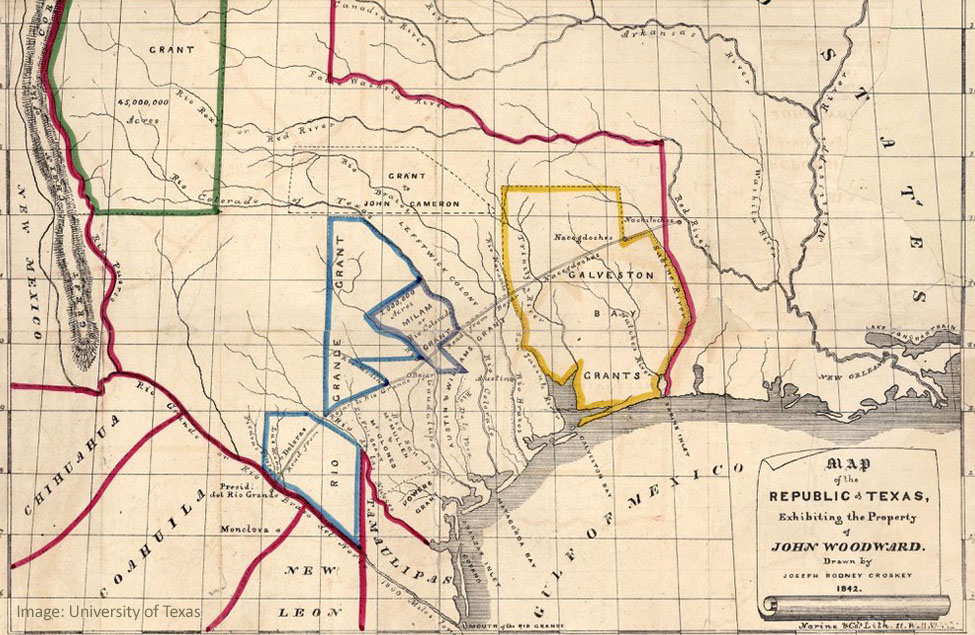
The Republic of Texas was a sovereign state from 1836 to 1846, until its annexation by the United States. It received diplomatic recognition from the United States, United Kingdom, France, Belgium, the Netherlands, and the Republic of the Yucatan (now part of Mexico). The republic sent eight diplomatic ministers to Washington, and its legation occupied eight different sites, including a Pennsylvania Avenue, NW boarding house near the current United States Navy Memorial. The Republic of Texas Legation Memorial will commemorate these diplomatic representatives in the form of a plaque or plinth at a yet-to-be determined site in Washington. Similar memorials can be found in London and Paris. In 1963, the Anglo-Texan Society erected a plaque on the former site of the Texas Legation near Saint James Palace, the most senior royal palace in the United Kingdom. An engraving on the façade of the current Hôtel de Vendôme in Paris also commemorates the historic home of the legation.
Washington is home to two National Historic Landmarks that housed legations
Out of the 75 National Historic Landmarks in Washington, two were former sites of the British Legation. The oldest is the Cleveland Abbe House on I St, NW, which also served as the residence of President James Monroe in 1817 when the White House was being restored after the British set fire to it in 1814. The Ashburton House on Lafayette Square, built in 1836, was the site of negotiations that settled border disputes between the U.S. and British provinces that are now Canada. Other prominent sites that housed legations include the Qing Dynasty’s mansion on 19th St, NW, constructed in 1902, and the oldest standing building in Washington built by a foreign government. Following the fall of the dynasty in 1912, the site housed the legation of the Republic of China. The Old Korean Legation Museum, a historic house museum located on Logan Circle, served as legation of the Joseon kingdom and the Korean Empire until Japan’s annexation of Korea in 1910.
The Texas Legation Memorial will come back before the Commission for further review. Under its authority as designated by the Commemorative Works Act, NCPC must approve the memorial’s site and design.
Commission Meeting Materials

